I wish they had a flagship. I would be able to accept compromises of course - thicker, more expensive… But still with top notch components.
There are two things stopping me:
The first one is that for the first time ever, I have a phone that I can just about take on a holiday, not take my DSLR, and not regret the decision. I reckon different people have different thresholds for this, but for me this bar sits at the recent crop of 1" camera sensors (maybe from 1-3 years ago, like Xiaomi 13U/14U, Vivo X100, etc).
The second one is that I tend to get flagships as a way to guarantee some longevity when doing some resource intensive tasks. I consider myself a power user, and while it’s true that phones have plenty of horsepower these days, there are tasks that are quite demanding. For example, I use Ente which does local indexing on the phone for the ML image search (which isn’t an “easy” task) and I do run small edge-type ML models (such as whisper, of re-train the transformer model in FUTO)… Now I know probably I could do those things on a 2025 mid-range processor, but I worry that by 2027 I will want to replace the phone because the things I want to do will have rendered the phone obsolete. A faster processor allows me to go for an extra year or two without suffering a painfully slow phone, so I’d also want this before making the switch.
This, and in terms of repairability/sustainability, it’s hard to make an “everything device” and do it well. Every time you think you got all user requirements covered, another user comes around the corner with a new set of hyper-specific requirements, and you’re back at square one figuring out supply chains and design fundamentals. If your aim is to make something repairable and sustainable that is hard to make that way, it’s much more feasible to just make two separate devices.
They also take in consideration whether the chips can be produced with fairly paid labour (to a certain level). I believe they have once stated that this was an important reason not to use some chips.
I mean, if showing pictures from your phone on a big screen is something you do so often that your phone absolutely has to do that and do it flawlessly, then yeah, I guess a midrange phone is not for you. But that’s such a specific requirement, I can’t exactly blame a company like Fairphone for not catering to those needs.
What do you use a camera for? If it’s only for scanning QR codes or whatever, fine. But if these are the photos that you take as memories of events in your life, why would you be content with them being grainy and low quality? I suppose it’s a question of what you’re used to.
Most of my childhood memories have been saved on grainy, imperfect pictures and, yeah, I’m content with that and cherish them all the same (probably even more so, because that reflects the time in which they were made). If I want high-resolution photographs of something, I use a proper camera, but there’s really nothing about “high-resolution” that implies “treasured memory” to me or vice versa.
Considering that even a midrange smartphone today is leaps ahead of “real” cameras from the past, I guess a different way to phrase your question is “Am I content to have my memories preserved with the image quality of a camera from 20 years ago?”. And the answer to that would be a clear “yes”. But to each their own.
I completely agree. I got the FP6 with /e/OS like half a year ago and I love everything about it except the camera. I basically stopped taking photos now and borrow my partner’s iPhone for photos instead… 😢
I also wish they would do a flagship but idk if they are at a size to develop and support 2 new phones.
I do think if they put flagship processors their phones that they would be more likely to last a long time and better fit with their selling point. But on the flip side, it then would (probably) be so expensive most people just couldn’t afford it. That being said, I’m happy with the FP6 so far. Feels like the snappiest phone I’ve ever owned even though I had an S20 FE previously which, on paper, has similar performance in benchmarks.
Hopefully one day they either release proper flagships or they make processors upgradable (probably even harder task tbh)
Got my used xiaomi 13T for that big sensor ( + Leica optics for what it’s worth) don’t know if it’s a 1" (checked, its a 1/1.28") but it’s enough for me. It would be hard to switch down a lot.


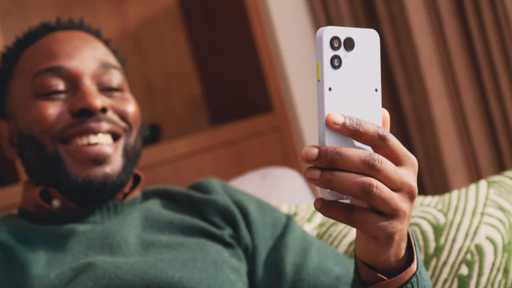
I am so happy, maybe they will have enough revenue to make even better products
I wish they had a flagship. I would be able to accept compromises of course - thicker, more expensive… But still with top notch components.
There are two things stopping me:
The first one is that for the first time ever, I have a phone that I can just about take on a holiday, not take my DSLR, and not regret the decision. I reckon different people have different thresholds for this, but for me this bar sits at the recent crop of 1" camera sensors (maybe from 1-3 years ago, like Xiaomi 13U/14U, Vivo X100, etc).
The second one is that I tend to get flagships as a way to guarantee some longevity when doing some resource intensive tasks. I consider myself a power user, and while it’s true that phones have plenty of horsepower these days, there are tasks that are quite demanding. For example, I use Ente which does local indexing on the phone for the ML image search (which isn’t an “easy” task) and I do run small edge-type ML models (such as whisper, of re-train the transformer model in FUTO)… Now I know probably I could do those things on a 2025 mid-range processor, but I worry that by 2027 I will want to replace the phone because the things I want to do will have rendered the phone obsolete. A faster processor allows me to go for an extra year or two without suffering a painfully slow phone, so I’d also want this before making the switch.
FP doesn’t need a flagship. There is only one line. That’s the flagship. Don’t like it? Don’t buy it.
Well yes, that’s the reasoning I suppose. Some won’t like it, and won’t buy it.
So maybe it’s wise to diversify. I don’t know, I’m not an economist
This, and in terms of repairability/sustainability, it’s hard to make an “everything device” and do it well. Every time you think you got all user requirements covered, another user comes around the corner with a new set of hyper-specific requirements, and you’re back at square one figuring out supply chains and design fundamentals. If your aim is to make something repairable and sustainable that is hard to make that way, it’s much more feasible to just make two separate devices.
They also take in consideration whether the chips can be produced with fairly paid labour (to a certain level). I believe they have once stated that this was an important reason not to use some chips.
Right, and so anyone who wants an actual flagship phone should skip Fairphone because they’re not going to like it. I’m glad we agree.
Unless you are an elite mobile gamer, you don’t need a flagship phone.
Even midrange will cover everyone’s needs.
Flagships are nothing but marketing bullshit.
I’ve had some midrange phones for a few days. They’re fine until I take photo and show it on a display that’s larger than a phone screen.
I mean, if showing pictures from your phone on a big screen is something you do so often that your phone absolutely has to do that and do it flawlessly, then yeah, I guess a midrange phone is not for you. But that’s such a specific requirement, I can’t exactly blame a company like Fairphone for not catering to those needs.
What do you use a camera for? If it’s only for scanning QR codes or whatever, fine. But if these are the photos that you take as memories of events in your life, why would you be content with them being grainy and low quality? I suppose it’s a question of what you’re used to.
Most of my childhood memories have been saved on grainy, imperfect pictures and, yeah, I’m content with that and cherish them all the same (probably even more so, because that reflects the time in which they were made). If I want high-resolution photographs of something, I use a proper camera, but there’s really nothing about “high-resolution” that implies “treasured memory” to me or vice versa.
Considering that even a midrange smartphone today is leaps ahead of “real” cameras from the past, I guess a different way to phrase your question is “Am I content to have my memories preserved with the image quality of a camera from 20 years ago?”. And the answer to that would be a clear “yes”. But to each their own.
So you want one with a top-ish-of-the-line camera
Yes, I would prefer a midrange phone with a flagship camera over a flagship phone with a midrange camera.
I completely agree. I got the FP6 with /e/OS like half a year ago and I love everything about it except the camera. I basically stopped taking photos now and borrow my partner’s iPhone for photos instead… 😢
Would be cool to be abke to upgrade the CPU by changing motherboard like with framework laptops, kinda unrealistiv tho
I also wish they would do a flagship but idk if they are at a size to develop and support 2 new phones.
I do think if they put flagship processors their phones that they would be more likely to last a long time and better fit with their selling point. But on the flip side, it then would (probably) be so expensive most people just couldn’t afford it. That being said, I’m happy with the FP6 so far. Feels like the snappiest phone I’ve ever owned even though I had an S20 FE previously which, on paper, has similar performance in benchmarks.
Hopefully one day they either release proper flagships or they make processors upgradable (probably even harder task tbh)
Got my used xiaomi 13T for that big sensor ( + Leica optics for what it’s worth) don’t know if it’s a 1" (checked, its a 1/1.28") but it’s enough for me. It would be hard to switch down a lot.
For the rest I don’t really care.