
11·
31 minutes agoKrass is German.
c not as fun as k.
That’s the worst attempt at Motte-and-bailey I’ve ever seen.
no one cares.
This conversation proves otherwise.
Krass is German.
c not as fun as k.
That’s the worst attempt at Motte-and-bailey I’ve ever seen.
no one cares.
This conversation proves otherwise.
Suchergebnisse für „empty” auf emojipedia:
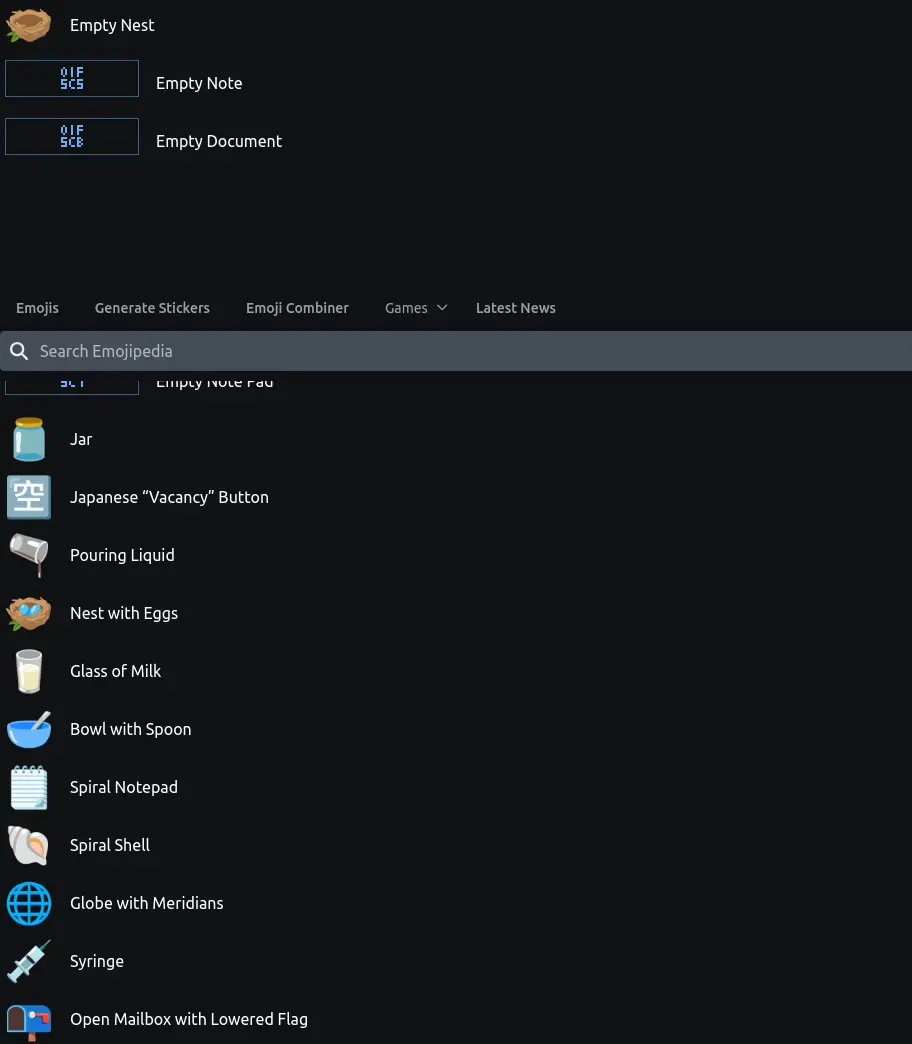
Auf emojikitchen:

Ja, aber auch viel zu viele Zeichen aus anderen Schriftsystemen, z.B. Han (China). Außerdem habe ich durch zufälliges Herumklicken keine Schriftart gefunden, die diese Zeichen auch tatsächlich richtig darstellt.
Mir wäre unter Linux Mint nichts standardmäßig Installiertes bekannt außer der Zeichentabelle, wo aber wirklich alle Zeichen drin stehen, was für’s Finden von Emojis nicht sonderlich hilfreich ist.
Krass is German.
That doesn’t change that the English spelling is crass.
Also, https://en.wiktionary.org/wiki/crass says crass made its way from Latin via French to English, not German. Always with a C, btw.
Erst einmal nicht vom Allerschlimmsten in einem Menschen auszugehen, ist nicht Schönreden. Est ist einfach nur nicht vorverurteilen. Audiatur et altera pars gilt aus gutem Grund seit über 2000 Jahren.
jeder kann Kinder bekommen.
Aber nur wenn er sie selbst macht. Anderer Leute Kinder kriegen ist schwerer.
Und einen Aufwandsvergleich.
The stars at the right edge of that image seem to smear out to the right – significantly more than the stars in the center or at the left edge.

Could you explain why that is?
Also, what’s with that odd aspect ratio of 5,889 x 4,416 pixels?
At first I thought the bright object in the center was an asteroid and I had my mind blown that you were able to photograph that from Earth!
Now I’m happy my sanity is intact, but I am a little disappointed.
Why is the 23rd shorter than the 21st and the 22nd? Why does the data and at midnight (?) between the 23rd and 24th? Why are the lines so curvy? Were there multiple polls per day?
This graph is not in my top-100 of data visualizations.
The argument stays the same. Only every index gets incremented.
Eure Spielplätze haben Schilder mit Namen drauf?
Most programmers don’t even touch binary anyhow
(Almost) every conditional (if, switch, while) and every test is binary.
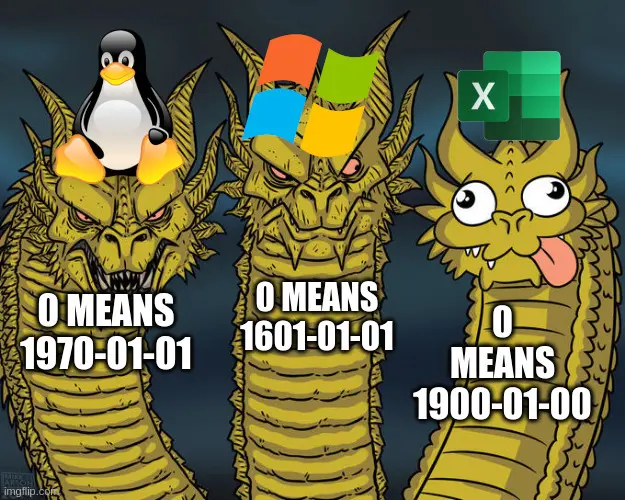
heinously written stuff that wasn’t expected to be in service even in the '90s.
Nothing more permanent than a temporary solution.
Ist ok, wir sprechen auch nicht was auch immer dein Post ist.












Like every name in IT in the last 10 years.
“Windows App”
“Rust”
<every goddamn hot beverage>