- 25 Posts
- 33 Comments
Joined 2 years ago
Cake day: July 13th, 2023
You are not logged in. If you use a Fediverse account that is able to follow users, you can follow this user.
Bad Romance by Lady Gaga. Idc if I’m a man in his late 20’s I’m putting my heart and soul into it

 11·18 days ago
Doesn’t seem to, they announced this a couple months ago
 3·27 days ago
Anki is great! Half my med school class uses it
100% true. Can’t also forget about nearly everyone getting cataracts by the time they’re in their 60’s!
See this is why I will randomly delete half of my DSO exposures before stacking. Don’t want unlucky data ruining the final image /s
 301·1 month ago
I had like 5 seconds of panic because there was a gray spot in my vision after I accidentally looked at a baileys bead completely unfiltered through my telescope the second the eclipse ended. Turns out I just had a smudge on my glasses :P
 3·1 month ago
It actually looks like it’s namesake!
This is a combo of SHO hubble palette + true color RGB for the stars. Captured in October 2025 from a Bortle 9 zone.
Places where I host my other images:
Flickr | Pixelfed
-
TPO 6" F/4 Imaging Newtonian
-
Orion Sirius EQ-G
-
ZWO ASI1600MM-Pro
-
Skywatcher Quattro Coma Corrector
-
ZWO EFW 8x1.25"/31mm
-
Astronomik LRGB+CLS Filters- 31mm
-
Astrodon 31mm Ha 5nm, Oiii 3nm, Sii 5nm
-
Agena 50mm Deluxe Straight-Through Guide Scope
-
ZWO ASI-290mc for guiding
-
Moonlite Autofocuser
Acquisition: 49 hours 56 minutes (Camera at -15°C)
-
Ha - 63x600"
-
Oiii - 122x600"
-
Sii - 102x600"
-
R - 63x60"
-
G - 63x60"
-
B - 63x60"
-
Darks- 30
-
Flats- 30 per filter
Capture Software:
- Captured using N.I.N.A. and PHD2 for guiding and dithering.
PixInsight Preprocessing:
-
BatchPreProcessing
-
StarAlignment
-
Blink
-
ImageIntegration per channel
-
DrizzleIntegration (2x, Var β=1.5)
-
Dynamic Crop
Narrowband linear:
-
MultiscaleGradientCorrection using MARS project data (had to do good ol fashioned DBE for the Sii channel)
-
BlurXterminator
-
StarXterminator to completely remove stars
-
STF applied via HistogramTransformation to stretch nonlinear
RGB Linear:
Channelcombination to make color image from RGB stacks
-
MultiscaleGradientCorrection (this is some seriously impressive shit!)
-
SpectrophotometricColorCalibration
-
BlurX (correct only mode)
-
HSV Repair
-
StarX to extract a stars only image
-
ArcsinhStretch + HistogramTransformation to stretch nonlinear
-
Slight curves saturation boost
Nonlinear processing:
-
Pixelmath to combine stretched narrowband images into color image (SHO/Hubble palette)
-
SCNR > Invert > SCNR > Invert to remove some greens and magentas
-
DeepSNR
-
Shitloads of curve transformations to adjust luminance, contrast, saturation, etc
-
HistogramTransformation to further stretch the red channel a little
-
more curves
-
NoiseX for some small scale chrominance noise reduction
-
Pixelmath to add in the stretched RGB stars only image from earlier
This basically re-linearizes the two images, adds them together, and then stretches them back to before. More info on it here)
mtf(.005,
mtf(.995,Stars)+
mtf(.995,Starless))
-
Slight SCNR
-
Resample to 65%
-
Annotation
-
What equipment/processing did you use?
I totally didn’t procrastinate processing this thing, and it’s just pure coincidence that I finally took a stab at it in October…
In hindsight, this really could’ve used another night of data (particularly the L), but I only had one clear night at the dark site. I was just happy to get out of the light pollution and shoot a dark nebula for once! Captured on August 17th, 2025 from a bortle 3 zone (deerlick astronomy village).
Places where I host my other images:
Flickr | Pixelfed
-
TPO 6" F/4 Imaging Newtonian
-
Orion Sirius EQ-G
-
ZWO ASI1600MM-Pro
-
Skywatcher Quattro Coma Corrector
-
ZWO EFW 8x1.25"/31mm
-
Astronomik LRGB+CLS Filters- 31mm
-
Astrodon 31mm Ha 5nm, Oiii 3nm, Sii 5nm
-
Agena 50mm Deluxe Straight-Through Guide Scope
-
ZWO ASI-290mc for guiding
-
Moonlite Autofocuser
Acquisition: 7 hours 21 minutes (Camera at -15°C), half unity gain
-
L - 56x180"
-
R - 30x180"
-
G - 30x180"
-
B - 31x180"
-
Darks- 30
-
Flats- 30 per filter
Capture Software:
- Captured using N.I.N.A. and PHD2 for guiding and dithering.
PixInsight Preprocessing:
-
BatchPreProcessing
-
StarAlignment
-
Blink
-
ImageIntegration per channel
-
DrizzleIntegration (2x, Var β=1.5)
For the L channel I did 3 stacks each with 1/3rd of the data, then combined them to an RGB image (was still grayscale) to use deepSNR noise reduction. after this it was properly converted to mono
-
Dynamic Crop
-
MultiscaleGradientCorrection
First time trying out the MARS thing in pixinsight. It seems to work very well
Luminance Linear:
-
BlurXterminator
-
Stars removed with starx
-
ArcsinhStretch + HistogramTransformation to stretch nonlinear
RGB Linear:
-
ChannelCombination to combine monochrome R G and B images in to single color image
-
MultiscaleGradient Correction
-
SpectrophotometricColorCalibration
-
BlurXterminator (correct stars only)
-
HSV Repair
-
Extracted stars with starXterminator, to be used later for independent starless processing
-
ArcsinhStretch + HistogramTransformation to stretch nonlinear
-
Slight saturation curve boost
** Stars only processing:**
-
ArcsinhStretch + HistogramTransformation to stretch nonlinear
-
Slight SCNR to remove greens and magentas
-
Curves to boost saturation
Nonlinear Processing:
-
LRGBCombination to combine stretched RGB and L images
-
DeepSNR Noise reduction
-
Several rounds of curve adjustments for lightness, contrast, saturation, color balance, with various masks
-
LocalHistogramEqualization
-
More curves
-
Pixelmath to add in the stretched RGB stars only image from earlier
This basically re-linearizes the two images, adds them together, and then stretches them back to before. More info on it here)
mtf(.005,
mtf(.995,Stars)+
mtf(.995,Starless))
-
BlurX to sharpen the stars a little
-
Even more curves
-
Slight SCNR
-
Resample to 70%
-
Tighter crop in on just the nebula
-
Annotation
-
What equipment/settings/processing did you use for this image?
Yep! It helps people give good feedback on images, and can help serve as a guide for newer people to the hobby
Can you include acquisition info?
Are you moving the mount in just one axis? Or doing both RA and DEC movements at the same time? You might also want to dither more frequently, especially with how many 30” subs you can get in a half hour. Even that amount of walking noise will add up
Although this comm is for original content only, this post will stay up since it’s gotten a lot of traction (and is a pretty badass pic)

 19·3 months ago
Pretty good for a phone! I’m guessing it’s doing some kind of stacking process? I think there would be some streaking with a single 4 min exposure, but your stars look nice and sharp
 32·3 months ago
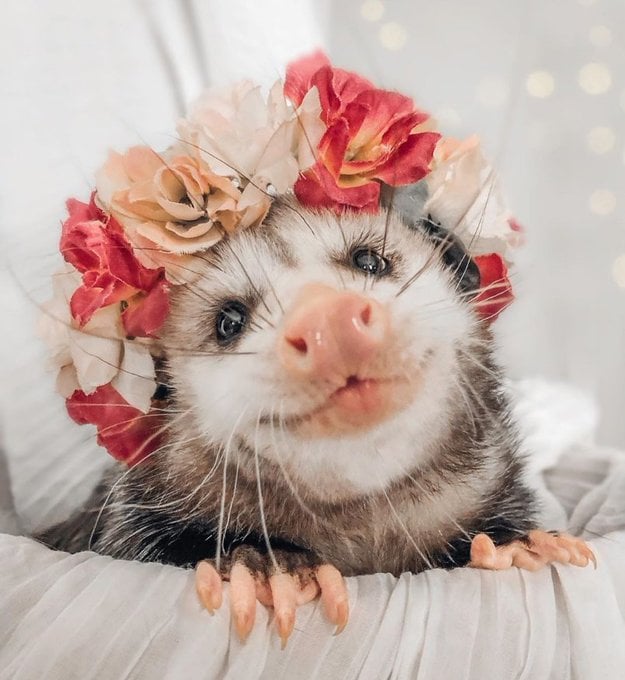
Opossums have 13 nipples
What equipment/settings did you use?



Yippie my comment never posted from last night! here’s the writeup:
Decided to give this one a reshoot under darker skies. My shot of it from 2019 had a lot more light pollution and less exposure time than this pic. M46 also has a small planetary nebula, NGC 2438, in the cluster. Captured on November 23rd, 2025 from a bortle 3 zone (Deerlick Astronomy village)
Equipment:
TPO 6" F/4 Imaging Newtonian
Orion Sirius EQ-G
ZWO ASI1600MM-Pro
Skywatcher Quattro Coma Corrector
ZWO EFW 8x1.25"/31mm
Astronomik LRGB+CLS Filters- 31mm
Astrodon 31mm Ha 5nm, Oiii 3nm, Sii 5nm
Agena 50mm Deluxe Straight-Through Guide Scope
ZWO ASI-290mc for guiding
Moonlite Autofocuser
Acquisition: 1h 14m minutes (Camera at -15°C)
L - 20x90"
R - 10x90"
G - 10x90"
B - 9x90"
Darks- 30
Flats- 30 per filter
Capture Software:
PixInsight Preprocessing:
BatchPreProcessing
StarAlignment
Blink
ImageIntegration per channel
DrizzleIntegration (2x, Var β=1.5)
Dynamic Crop
linear:
BlurXterminator (correct only)
STF applied via HistogramTransformation to stretch nonlinear
Channelcombination to make color image from RGB stacks
SpectrophotometricColorCalibration
HSV Repair
ArcsinhStretch + HistogramTransformation to stretch L and RGB images nonlinear nonlinear
Slight curves saturation boost for the RGB image
Nonlinear processing:
LRGBCombination with stretched L image as luminance
DeepSNR noise reduction
Lots of curve transformations
Slight SCNR to remove greens from some stars
more curves
Resample to 65%
Annotation