

2·
18 hours agoHave fun gooning rightoid 🐑
Have fun gooning rightoid 🐑
Nope I don’t believe you 🐑
Ah so all the games you were told by “influencers” to hate. Got it 🐑
An actual answer for the browser instead of just shitting on Brave would be IronFox (hardened Firefox), and the best place to get it would be the Accrescent app store.
But for real don’t use Brave…

But you see they can sell this! Can’t sell “fallow fields”…
Exactly. At the federal level the U.S. is an oligarchy completely controlled by the Epstein class.
Probably got the idea from the manosphere. That being said, actually sticking to that particular habit is something to be proud of, and is completely harmless… when you are that low, anything you can be proud of is a win.
The approver of the pull request does…
Gonna be real with you, I’m not running a password checker tool over unencrypted http. Is this vibe coded?
Of course, no question that with threat modeling you can arrive at /e/OS being an acceptable choice. However threat modeling is difficult and the devil is in the details, which is why I’m responding (mostly for the benefit of other readers of this thread) to provide the GrapheneOS side of things and avoid the impression that /e/OS offers unique or generally superior features in the areas we are discussing.
Here is GrapheneOS’s network location implementation details. https://grapheneos.org/features#network-location
From the official GrapheneOS response to exactly this same debate, it seems that the issue is MicroG’s reliance on having signature spoofing enabled. Which is a security hole that can be exploited by anyone, not just MicroG, as it allows anything to masquerade as Google Play Services to an app that wants to use it.
https://discuss.grapheneos.org/d/4290-sandboxed-microg/11
Yes, Google Play Services is closed source and contains functionality that would be considered “spying on the user”, and “malicious”. But that is the same for any closed source app; you can’t prove it isn’t trying to spy on you or compromise your device. What you can do is rely on the App sandboxing and fine grained permissions control that GrapheneOS allows to disable such functionality if it exists.
Of course, if even having a closed source app on your device is too much, then honestly you wouldn’t even be using MicroG as you wouldn’t want any apps using Google’s proprietary libraries for accessing Firebase or other proprietary services anyways…
So, GrapheneOS offers the most sane approach in my opinion, without opening any security holes. By default the entire OS (not talking about pixel firmware blobs, just the os and kernel drivers) are open source and you can use only open source Apps via Fdroid, Accrescent, direct with Obtainium, etc. But for the average user enabling sandboxed Google play and managing its permissions is the best compromise between security and privacy.




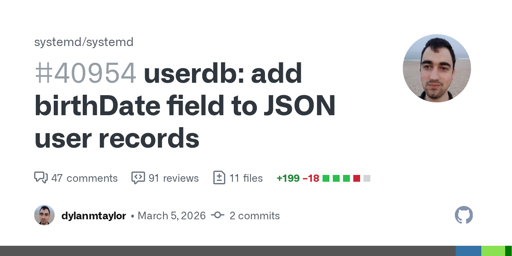


Goddamnit