

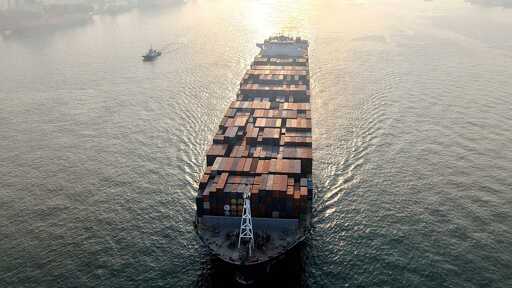
While exports from China to the US have fallen for most of the year, shipments have surged to other destinations, including Southeast Asia, Latin America, Africa, and the European Union.
Archived version: https://archive.is/newest/https://www.euronews.com/business/2025/12/08/chinas-exports-grow-59-in-november-while-us-shipments-drop-29
Disclaimer: The article linked is from a single source with a single perspective. Make sure to cross-check information against multiple sources to get a comprehensive view on the situation.
So much winning. 'Murica!
As an addition, it is important to note that China’s strong exports to the world except to the US has less to do with trade diversion due to US President Trump’s tariff conundrum but with weak demand at home, as a recent study by the European Central Bank (ECB) has found.
While escalating trade tensions between the United States and China might result in a further diversion of Chinese exports to Europe, the rise in China’s exports to the EU predates the latest tensions and coincides instead with the onset of weakness in domestic demand in China, the ECB says.
In the fourth quarter of 2024 the average monthly value of domestic sales was around four times higher than total exports and over 28 times larger than exports to the United States. This suggests the pool of goods that could be redirected to the EU is much broader than trade data alone would suggest. Redirecting even a small share of domestic sales abroad could boost overall exports – including to the EU – more than a sizeable diversion of exports from the United States.
The ECB argues that the start of rising exports and slowing imports dates back to 2021, when China’s crisis in its domestic real estate market - typically an import-sensitive sector - sharply curtailed household demand.
At the same time, state-imposed manufacturing investment created overcapacity in industries that would otherwise face market-driven constraints, which eventually resulted in fierce price wars in Chinese home markets forcing companies to seek relief in exports.
The ECB writes:
This has eroded profit margins and discouraged spending in a deflationary environment with significant labour slack – prompting firms to redirect sales toward foreign markets.This shift reflects the “vent-for-surplus” theory of international trade, which posits that a demand-driven decline in domestic sales generates excess capacity that can be redirected abroad. The mechanism assumes fixed investment in the short term, which is particularly relevant in China, where investment is often guided by central planning. To expand abroad, firms must gain competitiveness in foreign markets. They typically do so by reducing short-run marginal costs and prices, or by accepting narrower profit margins, and in some cases even losses. - [Emphasis mine.]
