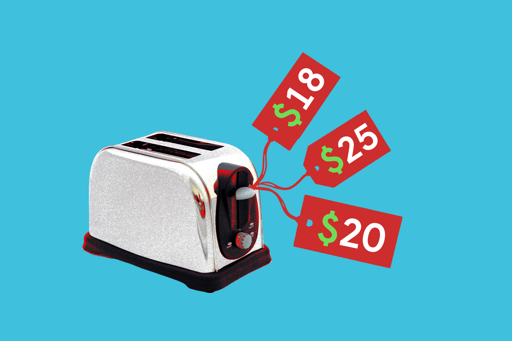
THE ESCALATING COST of living keeps making headlines and inspiring furious Reddit threads. Food prices remain a flashpoint, especially when it comes to coffee. But behind every grocery store gripe lies a deeper unease about whether wages are keeping up and the tariffs that continue to dominate economic news.
But the fixation on tariffs and inflation obscures a different shift revolutionizing pricing: algorithms. The Canadian Anti-Monopoly Project warns automated tools are reshaping what Canadians are charged for essential goods and services, including groceries and fuel. Companies can now use software to tailor prices based on everything from our browsing patterns, location, loyalty history, device type, and operating system. The same item can appear at one amount for you and another for someone else, depending on who you are, when you see it online, and what the algorithm believes you are willing to pay.
Here’s how it works. Companies gather data from many routine digital touchpoints: web and app tracking (cookies, pixels, and device fingerprinting), geolocation from phones and browsers, and in-store sensors. Also involved are data brokers who sell detailed consumer profiles combining demographics, purchase histories, and online behaviour. After the initial lure with attractive benefits and promises of discounts, (“the hook”), you’re handed over to a surveillance infrastructure that mines data about your behaviour and willingness to pay (“the hack”) and then raises fees, cuts rewards, and traps you in the program by making cancellation difficult (“the hike”).
…at least fictional Cyberpunk dystopias looked cool.
Silver lining: if the algorithm can tell that same economy means I’ve been unemployed for over half a year and on the verge of bankruptcy and adjusts the prices accordingly to make it dirt cheap, I’ll take it, I guess. Buut my little pinky says it’s not going to happen.
I think what this actually means is that some companies are now using technology to extract as much money as they possibly can from you and me.
I bet it will soon be the majority (if it isn’t already).
Yeah, that’s what I meant. It could be used as a tool to do good, but it’s only going to be used for literal price gouging.
The reason this is happening now is because of concentration of wealth. There’s no threat of the business owner loosing all their wealth if their business fails [from raising prices] because they have so much wealth. So they can raise prices, winking and nodding to thier competition all the way.
That doesn’t make sense. The tech bros have been saying for decades that all this data harvesting and surveillance will be used to improve lives.
You don’t think that individualized price gouging will improve life for Jeff Bezos?
Now don’t be so negative, the number of lives this will improve in the world may be up to three digits.
Possibly even for digits!!!
Companies gather data from many routine digital touchpoints: web and app tracking (cookies, pixels, and device fingerprinting), geolocation from phones and browsers, and in-store sensors.
I understand that collecting data from the browser and apps can change the price for items we typically order online. But the article mention groceries and fuel, aren’t those items typically bought in a store? How does my browsing have any impact on what I pay for a piece of bread?
Each physical store can have different prices on the same goods, to exploit the average differences between the populations in each area. Already happens between countries/continents, now it can happen on a neighborhood scale.
Sadly the key to avoiding becoming a victim of these tactics is to spend a significant portion of your time shopping around for everything. No retailer can be trusted. I preferentially order stuff from manufacturers webpages or compare multiple distributors before I buy anything.
I also utilize VPN services and a secondary browser if I think they are playing games. You can avoid this shit but it’s not easy.
I also try to completely avoid known companies who’s business model relies on these tactics.
Some people do all of their shopping via apps and that includes groceries. Those people are probably having their prices adjusted via algorithm.
Yeah, that would explain the groceries, but what about fuel? The fuel stations can adjust the price so it becomes more expensive in the morning when you are on your way to work or at holidays. But that would change the price for everyone.
Even if you don’t shop online, the stores are getting digital price tags. And if you want the discounts on sale items, you’ll need to use the app. The app will tell the store which store you shop in on what days, the store will make some guesses about your income, combine it with the other shoppers likely to be in the store that day, and find an average price to update all the products to.
Good point, and the guess of the income is very qualified since the app is used which means it is directly linked to you.
And I assume the same method can be used for the fuel stations which answers my question (in my other comment) about that.