

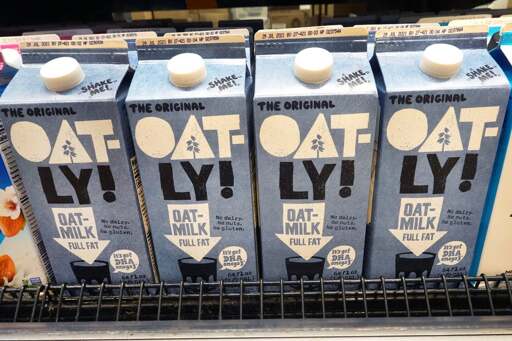
The UK’s highest court has sided with the dairy industry in the long-running row
Archived version: https://archive.is/newest/https://www.independent.co.uk/news/uk/home-news/oatly-milk-trademark-supreme-court-b2918307.html
Disclaimer: The article linked is from a single source with a single perspective. Make sure to cross-check information against multiple sources to get a comprehensive view on the situation.
What do you think changed?
From my perspective, people made this and used this in their own homes. It was in cookbooks. Being able to buy it in a store doesn’t change the context of 800+ years of history.
deleted by creator
But in what way does that change the meaning of the established linguistics? That’s the part I’m struggling to grasp. I understand the commercial milk producers wanting to muddy the waters from a competitive perspective, but why should you or I want almond milk, or other plant based milks, called something not ‘milk’?
deleted by creator
Hmm. I’m afraid this is where we’re going to disagree. I don’t agree milk needs a legal definition. I don’t agree that consumers need protection from the word ‘milk’ being attached to other products, especially plant based milks that are generally clearly labeled and have hundreds or more years of context in our language.
Hell. There’s ‘human milk’, ‘goat milk’, ‘yak milk’, etc.
If something needs to change, it should be that we need to now call it ‘cow milk’ and truly protect the consumer from confusion.
deleted by creator
Unless you’re drinking milk from the cow’s tit, your milk is very mucg an industrial product to make it shelf stable and consistent. People have a totally wrong idea of what real milk feels or tastes like or what’s involved in its production. At least oat milk is literally just filtered porridge you can make at home.
deleted by creator