

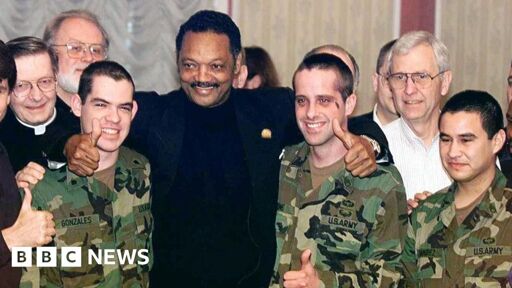
It was May 1999, and US Army sergeant Andrew Ramirez had been held captive for over a month by Yugoslav forces, enduring days of dark confinement and interrogations.
Just a few weeks earlier, Ramirez and two other soldiers had been on a routine patrol near the Macedonian-Yugoslav border during the war in nearby Kosovo when they unexpectedly bumped into enemy forces and surrendered after a brief firefight.
At the time of Ramirez’s capture, Nato forces, led by the US, were just days into a massive air campaign aimed at forcing the Yugoslav government of then Serbian leader Slobodan Milosevic to withdraw from Kosovo.
Jackson, then 57, already had a history of what some termed “private diplomacy” aimed at helping Americans abroad.
“It was a frenetic three of four days,” Blagojevich added. “Milosovic originally offered to let him take one or two of the soldiers back. Jackson was steadfast. He said we’re not going to just take one or two. We take either all of them or none of them.”
The Yugoslavs relented. The soldiers were released on 1 May and crossed into Croatia with Jackson and his delegation on 2 May before being flown to a US base in Germany.