

For months, President Donald Trump has railed against Latin American narcoterrorists flooding the United States with “lethal poison.” He has used the scourge of drug trafficking as a rationale for dozens of military strikes on alleged drug boats in the Caribbean and eastern Pacific Ocean, which have left more than 140 people dead.
Last month, Trump cheered a military assault by U.S. forces that captured Venezuelan President Nicolás Maduro and his wife, Cilia Flores, and brought them to the U.S. to face charges related to cocaine trafficking. Maduro, Trump said, led a “vicious cartel” that “flooded our nation with lethal poison responsible for the deaths of countless Americans.”
But when it comes to former Honduran President Juan Orlando Hernández, who was tried and convicted in the U.S. in 2024 and sentenced to 45 years in prison for taking bribes and allowing traffickers to export more than 400 tons of cocaine to the U.S., Trump has taken a decidedly softer tone.
Hernández, he said, has been “treated very harshly and unfairly” — so unfairly that on Dec. 1, Trump pardoned the former president after he served less than four of those 45 years.
But the federal government’s magnanimity did not end there. On the day he was to be released, records show, Hernández had an immigration detainer — a request for law enforcement agencies to hold noncitizens for pickup by Immigration and Customs Enforcement — in place.
Here, too, the Trump’s administration’s treatment of Hernández differed from its public objectives. Other noncitizens caught up in recent immigration sweeps — the vast majority of whom do not have criminal records — have faced swift efforts to deport them, even to countries where they may face threats. But in Hernández’s case, the Federal Bureau of Prisons scrambled to get his detainer removed so he could walk free.
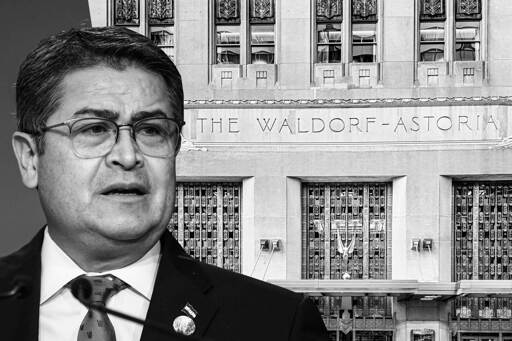
And Hernández did not just walk out of the prison. Despite persistent budget and staffing shortages, prison officials paid a specialized tactical team overtime to drive Hernández from a high-security facility in West Virginia to the famed five-star Waldorf Astoria hotel in New York City, according to records and three people familiar with the situation. Before he left, Hernández was allowed to use the captain’s government phone to talk to the federal prison system’s deputy director, Joshua Smith, who was convicted in a drug trafficking conspiracy before Trump pardoned him in 2021.